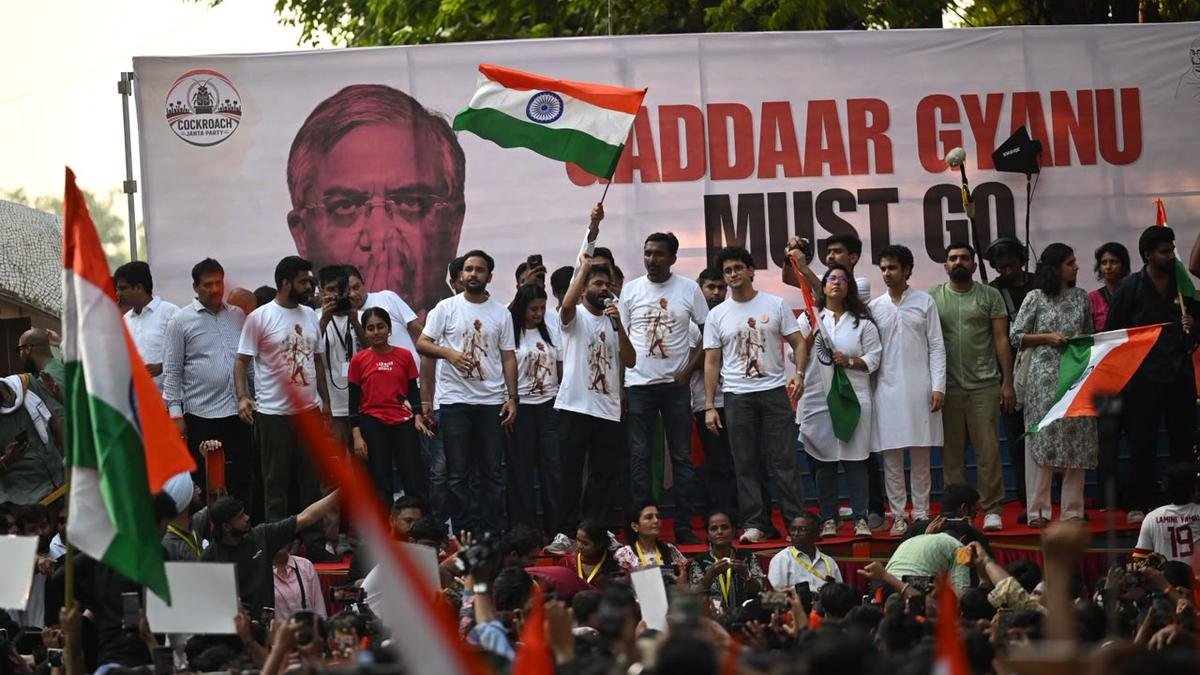
Public Anger and Street Protests Over Electoral Rolls
The streets of major Indian cities have turned into battlegrounds as thousands of citizens, youth groups, and political figures launch aggressive demonstrations against the election authority. The core trigger behind these widespread protests is the contentious Special Intensive Revision (SIR) of voter lists, which critics argue has led to the mass deletion of legitimate voters. While the Election Commission maintains that the revision is a standard administrative procedure to remove duplicate or ineligible entries, opposition parties and civil bodies claim it is a systematic attempt to disenfranchise voters.
Thousands of demonstrators gathered at Mumbai's Shivaji Park under the banner of citizen groups to demand accountability.
Delhi Police detained hundreds of students, activists, and political leaders near Jantar Mantar during coordinated march attempts.
Opposition alliances have announced nationwide "Save Democracy" marches and district-level agitations to challenge the current poll panel leadership.
Protesters have raised serious concerns about transparency, demanding booth-wise data disclosure and a return to traditional ballot paper voting.
Detailed reports published by
An Opinion on the Deepening Crisis of Institutional Trust
From an analytical perspective, these protests represent far more than a routine political disagreement—they point to a dangerous erosion of trust in India's foundational democratic referees. The Election Commission of India has historically stood as a globally respected pillar of neutrality and impartial oversight. When the public is driven to mass agitations, mass detentions, and open demands for the removal of the Chief Election Commissioner, the entire framework of free and fair elections takes a severe hit. A democracy does not collapse overnight from a lack of votes; it hollows out from within when the citizens lose faith in the independence of the very institution tasked with protecting their voice.
Predictions for the Road Ahead
Looking forward, the ongoing standoff between civil society, opposition groups, and the election body is bound to escalate political polarization in the country.
Deepening Institutional Gridlock: The growing friction will likely result in protracted legal battles in higher courts over administrative overreach and the statutory framework governing poll appointments.
Heightened Scrutiny in Upcoming Polls: Every upcoming state and local election will face intense microscope scrutiny, with opposition parties deploying parallel volunteer-driven voter verification to counter official data.
Expanded Grassroots Movements: If administrative transparency is not immediately restored, localized protests are predicted to coalesce into a unified national campaign demanding structural reforms within the election machinery.