Reaching New Heights in Space Flight
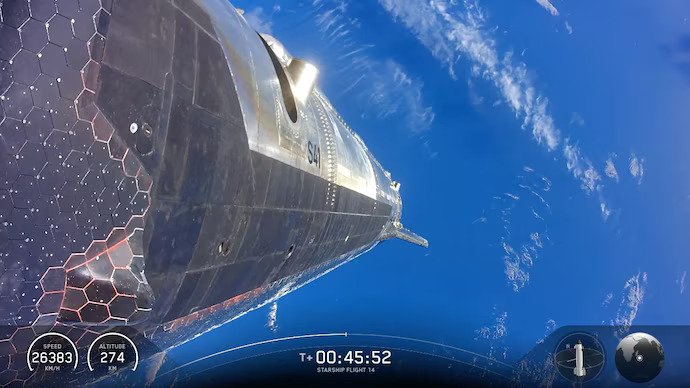
The latest test flight from South Texas marks a turning point for private space travel as the giant vehicle successfully pushed past suborbital limits. Engineers and space fans watched closely as the towering rocket system cleared the launch pad and powered through the atmosphere. Despite minor technical hiccups during the initial ascent, mission controllers confirmed that the spacecraft successfully reached its target altitude and completed the critical orbital burn.
The 14th test flight achieved what previous missions only tested partially.
Mission control verified the successful orbital insertion burn.
The megarocket carried a batch of next-generation test payloads.
Engineers gathered crucial flight data for future crewed missions.
Overcoming Challenges During the Historic Launch
Even though the flight faced an early engine shutdown on one of its units, quick thinking by the ground team saved the mission. Detailed insights from The Times of India explain how engineers bypassed the faulty engine to proceed with the crucial orbit burn. Furthermore, coverage by India Today highlights that the spacecraft managed to settle smoothly into its planned path roughly 275 kilometers above the planet. This resilience proves the design can handle unexpected anomalies in flight.
What This Milestone Means for Future Missions
Achieving orbit opens up entirely new possibilities for commercial space payloads and long-distance exploration goals. Reports from The Hindu emphasize that mastering orbital mechanics is vital for heavy cargo transport and upcoming lunar programs. As SpaceX continues to refine its heat shields, booster landings, and in-space capabilities, this successful flight brings humanity one step closer to regular flights toward the Moon and Mars.