The Desktop Infrastructure Revolution: How Kubernetes Finally Closes the Gap
For years, enterprise IT has operated in a "split reality." On one side, we have the modern, cloud-native application layer, dominated by the declarative power and automated scaling of Kubernetes. On the other, we have the stubbornly manual, operationally isolated world of desktop infrastructure—Virtual Desktop Infrastructure (VDI) that relies on pre-allocated VM pools, bespoke management planes, and proprietary appliances.
But that divide is finally closing. Kubernetes is no longer just for backend microservices; it is becoming the engine for secure, containerized desktop delivery, solving the operational inefficiencies that have plagued remote work and regulated workflows for decades.
The "Split Reality" Problem
The high cost of maintaining two separate operational models is significant. Platform engineers proficient in Kubernetes—orchestrating complex clusters with GitOps and Helm—are forced to context-switch to a completely different mental model the moment a desktop infrastructure issue arises.
This bifurcation leads to:
Tooling Fatigue: Maintaining separate observability, scaling, and configuration runbooks for VDI and cloud applications.
Operational Inefficiency: Legacy desktop models often require "pre-warmed" VM pools, leading to resource waste and sluggish responsiveness during demand spikes.
Security Silos: VM-based desktops struggle to provide the granular, ephemeral isolation that modern containerized environments offer.
Kubernetes: The New Control Plane for Desktops
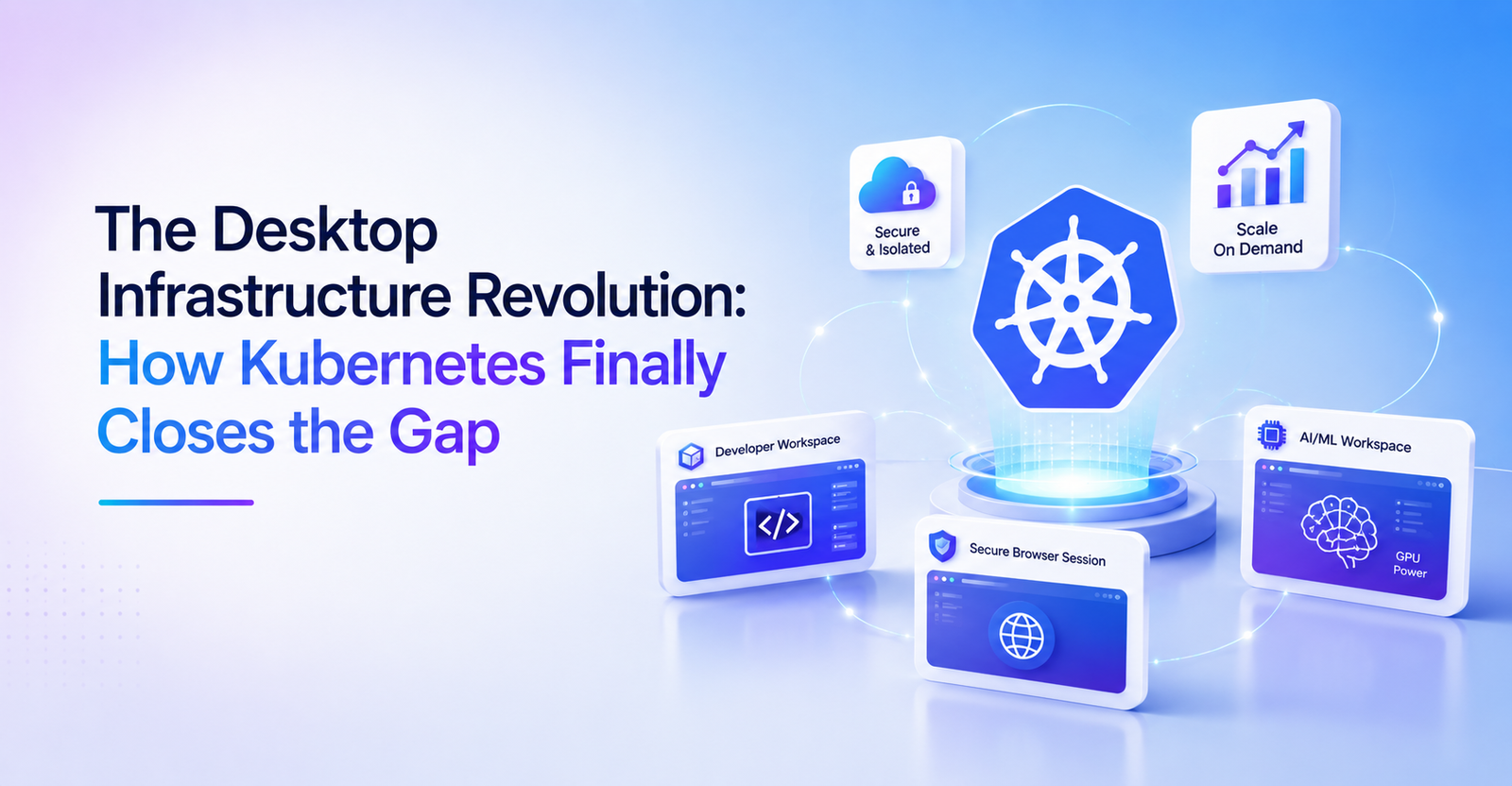
The shift toward Kubernetes-native workspace delivery is driven by the realization that secure desktops are simply another workload. By utilizing Kubernetes as the control plane, organizations can treat desktop sessions just as they treat application pods:
Horizontal Scaling on Demand: Unlike legacy VDI, which requires maintaining idle hardware "just in case," Kubernetes orchestrates session scaling in real-time.
Declarative Configuration: Using Helm values and GitOps pipelines allows platform teams to manage desktop environments with the same version control and consistency applied to core applications.
Enhanced Security through Isolation: Because sessions are now containerized, they are inherently ephemeral. Each session terminates cleanly without persistent state, providing a level of isolation that VM-based models struggle to match.
Unified Observability: Integrating desktop metrics into existing Prometheus or Grafana stacks eliminates the "visibility gap," allowing teams to monitor desktop health alongside backend services.
Real-World Impact
This transformation is already moving from theory to production. In regulated industries like finance, organizations are deploying containerized browser and application sessions within the same cluster as their data-processing workloads. In AI/ML teams, Kubernetes-native workspaces now allow for the delivery of fractional GPU resources—using technologies like NVIDIA MiG—directly into isolated sessions for data scientists.
As organizations mature their container platform investments, the question is no longer "Can we run desktops on Kubernetes?" but rather "Why isn't this running on Kubernetes already?". By unifying the desktop layer with the cloud-native ecosystem, enterprises are finally eliminating the operational toil that has slowed them down for years, paving the way for a more efficient, secure, and developer-friendly infrastructure.